
Your Home Has Blood Pressure Too
Why Water Pressure Matters More Than Most Homeowners Realize
When you go to the doctor, one of the first things they usually check is your blood pressure.
Why?
Because blood pressure can tell the doctor a lot about your overall health. If it is too high, there may be problems happening inside your body that you may not feel yet.
Your home’s plumbing system is very similar.
Your home has “blood pressure” too.
It is called water pressure.
And just like high blood pressure can be hard on your body, high water pressure can be hard on your home’s plumbing system.
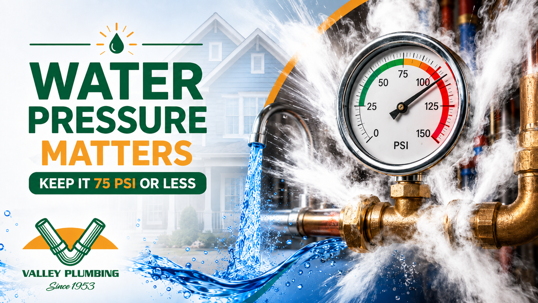
The Big Number to Remember: 75 PSI or Less
At Valley Plumbing, we recommend keeping your home’s water pressure at:
75 PSI or Less
This helps protect your:
Pipes
Faucets
Toilets
Water heater
Shower valves
Angle stops
Supply lines
Dishwasher and washing machine connections
High water pressure may feel good in the shower, but behind the walls, it can slowly wear out the parts of your plumbing system.
What Is Water Pressure?
Water pressure is the force that pushes water through your home.
It is what makes water come out of your shower, faucets, toilets, hose bibbs, washing machine, and dishwasher.
When the pressure is right, everything works the way it should.
When the pressure is too high, it pushes too hard on the plumbing system.
Think of it like a balloon.
A little air is fine.
Too much air stretches the balloon until it may pop.
Your plumbing system works in a similar way.
Why High Water Pressure Can Damage Your Home
High water pressure does not always cause a leak right away.
That is what makes it dangerous.
It can slowly wear down parts of your plumbing system over time.
High pressure can lead to:
Leaking faucets
Running toilets
Dripping shower valves
Worn-out supply lines
Leaking angle stops
Water heater stress
Appliance connection leaks
Banging pipes
Possible pipe leaks
A pipe, valve, or supply line may be getting weaker for months or years before a leak finally shows up.
A Little Pressure Change Can Be Normal
Your water pressure may change a little during the day.
That can be normal.
In the morning, many people are showering, using sprinklers, washing clothes, and getting ready for the day.
In the evening, families are cooking, doing dishes, bathing kids, and using more water again.
During these busy times, pressure may drop a little.
When fewer people are using water, pressure may rise again.
Small changes can be normal. Big changes should be checked.
If your pressure suddenly spikes, drops too low, or keeps changing a lot, your pressure regulator may not be working the way it should.
Your Pressure Regulator Helps Protect Your Home
A pressure regulator is like a traffic guard for your water.
It helps control how much pressure enters your home.
City water pressure can sometimes be higher than what your home’s plumbing system should handle.
The regulator helps lower that pressure to a safer level.
When your regulator is working properly, it helps keep your plumbing system safer.
When it is old, worn out, clogged, or failing, your home may be getting too much pressure without you even knowing it.
Why Insurance Companies Are Looking at Water Pressure
Insurance companies are now paying closer attention to the overall health of a home’s plumbing system.
This can include water pressure.
Just like a doctor checks blood pressure to understand your body’s health, insurance companies may look at water pressure to understand the health of your plumbing system.
If water damage happens, they may want to know:
Was the water pressure too high?
Was there a working pressure regulator?
Were there warning signs?
Was the plumbing system being maintained?
High water pressure can make it look like the plumbing system was not being properly protected.
That is why checking your water pressure matters.
It is not just about comfort.
It is about protecting your home.
How Do You Know If Your Water Pressure Is Good?
The best way to know is to have it tested.
A plumber can check your pressure and inspect your pressure regulator.
You can also buy a simple pressure gauge that connects to an outside hose faucet, but it is important to understand what the number means.
If your pressure is close to 75 PSI or higher, it should be checked.
If your pressure goes up and down a lot, that can also be a sign your regulator needs attention.
Simple Ways to Protect Your Plumbing System
Here are easy ways to help protect your home:
Check your water pressure once a year.
Keep pressure at 75 PSI or less.
Make sure your pressure regulator works.
Do not ignore banging pipes.
Fix dripping faucets quickly.
Watch for running toilets.
Check under sinks for leaks.
Look at toilet and faucet supply lines.
Pay attention to sudden high water bills.
Call a plumber if something seems different.
Small checks can help prevent bigger problems later.
Valley Plumbing Is Here to Help
Your plumbing system works hard every day.
Keeping your water pressure under control is one of the easiest ways to help your plumbing system last longer.
Think of it like a yearly checkup for your home.
Just like checking blood pressure can help protect your health, checking water pressure can help protect your plumbing system.
Not sure what your home’s water pressure is?
Valley Plumbing can help.
We can test your pressure, check your regulator, and let you know if your plumbing system is being protected the way it should be.
As always, we are here to help.